Comprehensive Guide to Using Silica in Various Industries
برچسبها: Silica,Comprehensive Guide to Using Silica in Various Industries
Introduction to Silica and Its Industrial Importance
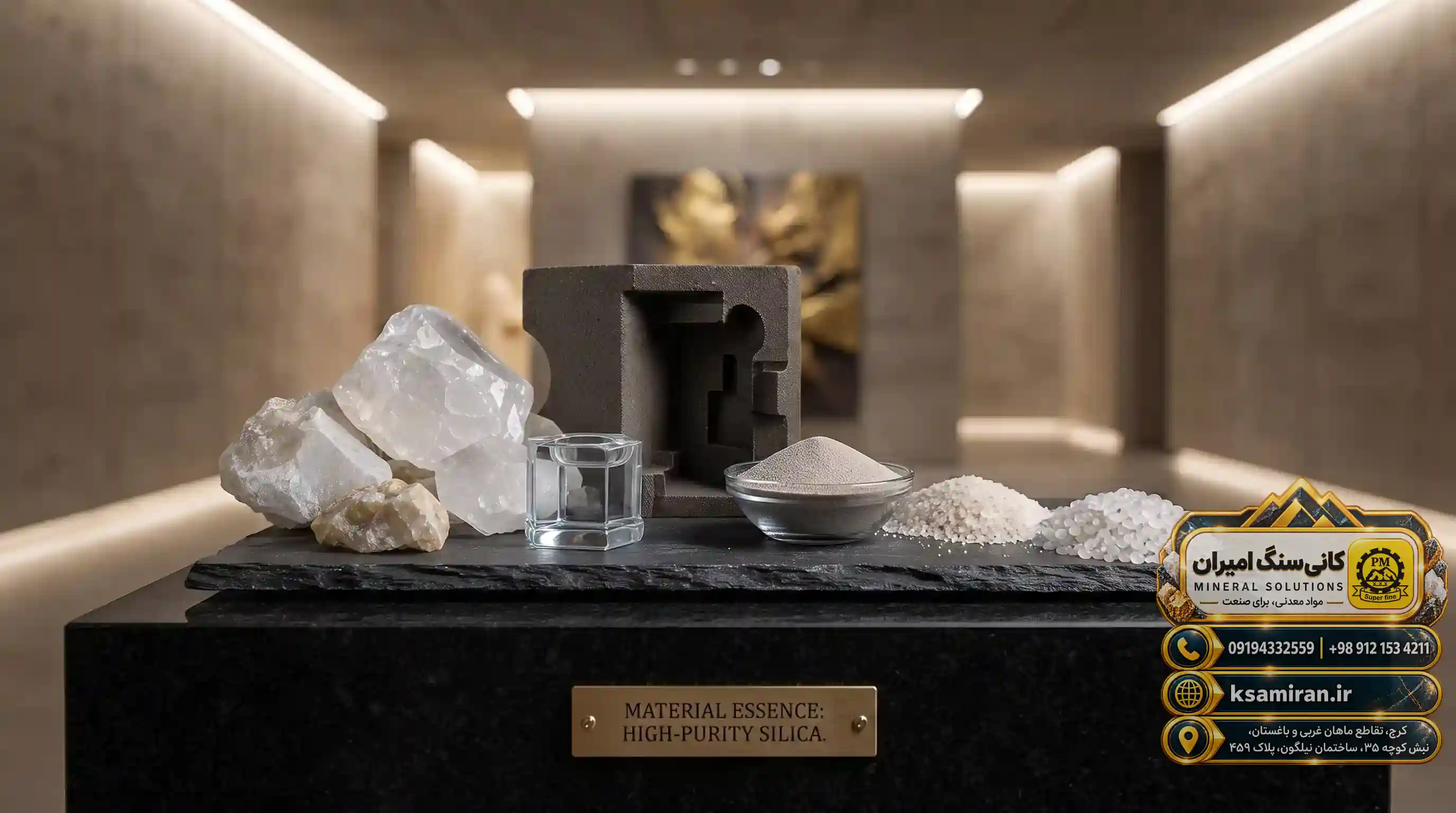
The mineral silica is one of the most abundant and versatile elements in the Earth's crust, holding an irreplaceable position in various industries due to its unique physical and chemical properties. This valuable material is recognized as one of the primary pillars in the production of industrial products and is processed with high precision in the mining projects of Kani Sang Amiran Company. A thorough understanding of the properties of this mineral helps various industries achieve optimal efficiency from it.
During the production and preparation process, the mesh size range of this mineral is of utmost importance. This product is granulated and supplied in a mesh range of 10–450 mesh, covering a wide spectrum of industrial needs. From heavy construction industries to more precise sectors like glassmaking and ceramics, each requires a specific granulation of this material. To examine the characteristics in more detail and order this product, you can visit the silica product introduction page.
The variety of applications has caused this material to function beyond a simple mineral and emerge as a strategic raw material in the industrial economy. In the rest of this guide, we will examine the key applications of this material in industries such as glass, foundry, ceramics, and building materials in greater detail to better reveal its technical and economic importance.
The Key Role of Silica in the Glassmaking Industry
The glassmaking industry is considered one of the oldest and largest consumers of silica in the world. The purity and granulation of this material have a direct impact on the quality, transparency, and thermal resistance of the produced glass. The use of appropriate granulation prevents the formation of bubbles and impurities in the final glass structure and allows melting furnaces to operate more efficiently.
In the glass production process, this mineral acts as the primary network forming the glass. High chemical stability and a suitable melting point make it an unrivaled choice. Strict compliance with quality standards in this field is doubly important, as the slightest impurity can affect the color or transparency of the glass.
In addition to ordinary glass, the presence of this material is also vital in the production of specialized containers and panels. By utilizing advanced technologies, suppliers provide this material with precise mesh sizing to glass factories so that high-quality, standard products can be sent to the consumer market.
Application of Silica in Foundry Products
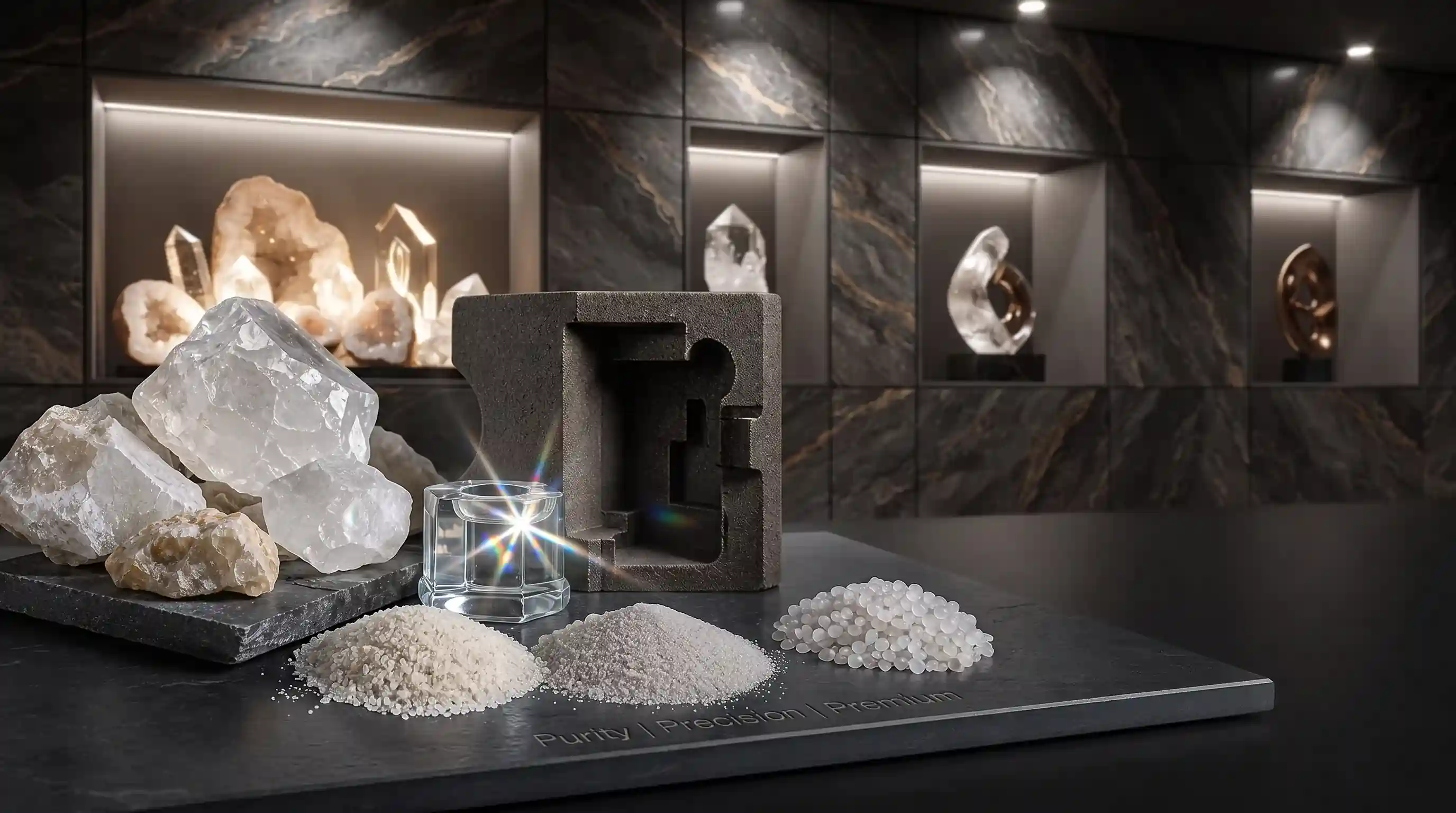
In the foundry, molding, and metal parts manufacturing industries, silica plays a very decisive role. The extraordinary thermal resistance of this material against the extremely high temperatures of molten metals makes it a standard material for making sand molds and refractory coatings.
Choosing the correct mesh range for casting is of great importance because particle size directly affects mold strength, gas permeability, and the surface quality of the cast part. Particles with suitable granulation help ensure that metal parts have the minimum amount of surface defects after casting, and the cleaning process is performed with higher precision.
The use of this mineral in founding not only improves the technical quality of parts but is also very cost-effective and justifiable for production units from an economic standpoint due to its high durability and the possibility of partial recycling of molding sands.
Application of Silica in Ceramic Products
The ceramics industry is heavily dependent on mineral raw materials, and among them, silica is recognized as the main skeleton of ceramic bodies and glazes. This material controls the thermal expansion coefficient of the ceramic body and prevents the cracking of parts during kiln firing stages.
When formulating the bodies of tiles, ceramics, sanitary ware, and utensils, the presence of this material increases the mechanical strength and dimensional stability of the part. Its proper mesh sizing plays an important role in the uniformity of the ceramic clay mixture and guarantees the final quality of the product.
It is interesting to note that the production process of minerals in various industries shares similarities; as explained in the practical guide to using kaolin in paint manufacturing industries, the precise selection of mineral raw materials is the key to success in the coating and ceramics industries.
آدرس: کرج تقاطع ماهان غربی و باغستان نبش کوچه ی 35 ساختمان نیلگون پلاک459
تلفن ۱: 0912 153 4211
ایمیل: amiran.kani.sang@gmail.com
Application of Silica in Building Materials
In the construction industry, silica is widely used as a functional filler and reinforcer in various mortars, concretes, tile adhesives, and cement-based materials. The pozzolanic properties of certain types of this material significantly help improve the compressive strength and durability of concrete against environmental factors.
The optimal granulation of this material reduces the void space between cement particles and aggregates, thereby creating a denser and more impermeable structure. This feature is of vital importance in large civil engineering projects, dam construction, and structures exposed to moisture.
The correct application of this mineral in building materials, in addition to increasing the lifespan of the structure, helps improve the physical and workability properties of mortars during execution, enhancing the efficiency of artisans on construction sites.
Examining the Mesh Range and the Importance of Granulation in Final Quality
One of the most important parameters in purchasing and applying silica is paying attention to its mesh range. Products manufactured in the 10–450 mesh range are each optimized for a specific application. Coarser meshes are typically used in construction and foundry industries, while finer meshes find application in glassmaking and ceramics.
Precise control of particle size in the production process lines of Kani Sang Amiran Company ensures that the final product is completely homogeneous and free of undesirable particles. This precision in granulation allows end consumers to have more accurate and stable formulations.
Accurate knowledge of the required mesh reduces production waste and increases the productivity of industrial machinery. For this reason, consulting with technical experts before purchase is an essential step for making the correct choice.
Comparing Silica with Other Industrial Minerals
In the mineral supply ecosystem, each mineral has its own specific features and is used for defined purposes. For example, in the petrochemical and drilling industries, examining the benefits of using industrial barite in petrochemical industries shows that high specific gravity is the main factor for its application, whereas in silica, the purity of silicon dioxide and thermal resistance are what matter.
Also, in the cellulosic and paper industries, different materials such as those described in the comprehensive guide to using white talc in the paper industry are employed, focusing on softness and coverage. In contrast, this mineral stands out as a hard and resistant phase in construction, glass, and ceramic industries.
This comparison clearly shows that every mineral has its specialized place, and making the right choice based on the technical needs of the project is the main key to optimizing industrial processes.
Safety Tips and Silica Purchasing Guide
The use of silica in industrial environments requires adherence to safety tips. Continuous inhalation of dust containing fine particles of this material can cause respiratory hazards; therefore, using appropriate personal protective equipment such as standard masks when working with micronized powders is mandatory.
When purchasing this product, paying attention to specifications such as purity percentage, moisture content, and mesh range is very important to ensure it matches the technical requirements of your production line. Kani Sang Amiran project, by offering high-quality products in the 10–450 mesh range, best covers the needs of the glass, foundry, ceramics, and building materials industries.
To obtain more information, inquire about prices, and place an order, it is recommended to share your project's technical specifications with the sales and support team so that the most suitable granulation can be suggested to you.
| Question | Answer |
|---|---|
| What is silica and what are its applications? | It is a strategic mineral used in the glass, foundry, ceramics, and building materials industries. |
| What is the mesh range of this product? | This product is produced and supplied in a mesh range of 10–450 mesh. |
| Is it used in glassmaking? | Yes, it is used as the primary network and an agent for transparency and thermal resistance in glass. |
| What is its role in founding? | It is used for making sand molds and refractory coatings resistant to high temperatures. |
| Why is it consumed in ceramics? | It is used to control the thermal expansion coefficient and increase the strength of the ceramic body and glaze. |
| What role does it play in building materials? | It acts as a filler and improver of concrete and construction mortar strength. |
| How can this product be purchased? | It can be ordered through the Kani Sang Amiran website and the dedicated product page. |
| Does working with its powder have hazards? | Inhaling its fine dust requires the use of masks and safety equipment. |
| What is the difference between various meshes? | Coarse meshes are suitable for foundry and construction, and finer meshes are suitable for glass and ceramics. |
| Where is the manufacturer of this product located? | The Kani Sang Amiran project supplies this product as a mineral producer. |
Kani Sang Amiran, specialized reference for mineral processing and supply.
- ۰ ۰
- ۰ نظر