How to Choose the Best Type of Calcium Carbonate for the Factory?

برچسبها: Calcium Carbonate,How to Choose the Best Type of Calcium Carbonate for the Factory?
Introduction to the Importance of Choosing Calcium Carbonate in Modern Industries
Selecting high-quality raw materials tailored to industrial needs is one of the primary concerns for manufacturing plant managers. Among widely used minerals, calcium carbonate holds a special and irreplaceable position, utilized in various industries including polymers, paints, paper, and engineered products due to its unique physical and chemical properties. A precise understanding of the qualitative and technical parameters of this material is the key to success in optimizing formulations and reducing production costs.
To make the right choice, we must first familiarize ourselves with the nature of this mineral and its role in improving the final product's properties. The diverse mesh range from 100 to 3500 mesh allows various industries—ranging from construction products to precise coatings and thin polymer films—to acquire a material that exactly matches their machinery and standards. In this comprehensive article, all key points for selecting the best type of this mineral for your factory will be examined.
Additionally, during industrial production, it is sometimes necessary to use other minerals such as feldspar or talc alongside this material. For a better understanding of choosing other raw materials, reading the guide How to choose the best feldspar for your factory is definitely worthwhile. Understanding these materials simultaneously helps design engineers create more optimal and higher-quality compounds.
Examining the Key Role of Calcium Carbonate in Polymer and Plastic Industries
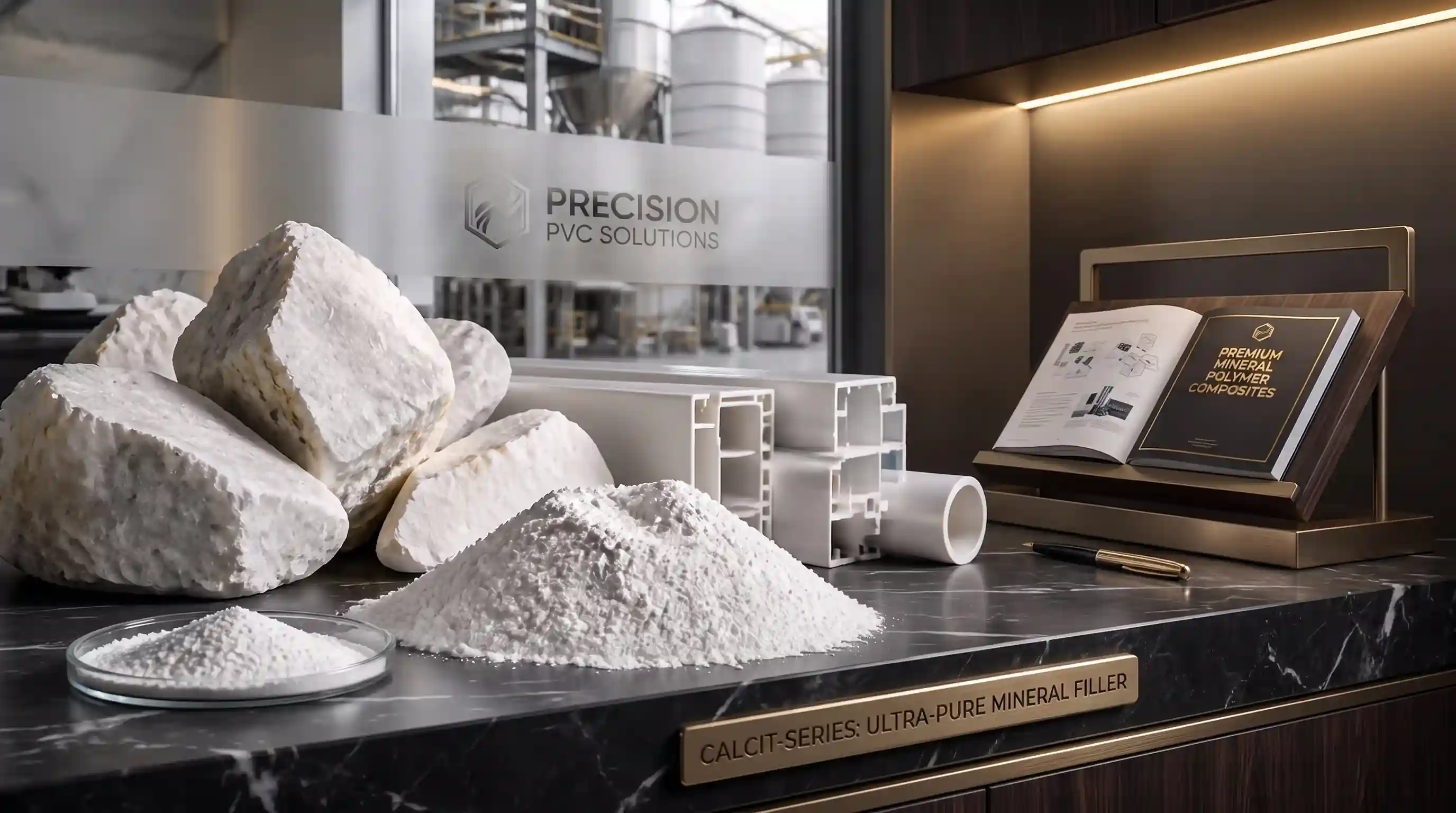
The polymer and plastic industry is one of the largest consumers of mineral materials, and amidst this, using calcium carbonate as a filler and mechanical properties enhancer is of utmost importance. In the production of PVC/UPVC profiles and pipes, the presence of appropriate mineral particles increases impact resistance, improves dimensional stability, and reduces the final product's cost without causing a noticeable drop in appearance quality and durability.
Furthermore, in the production of masterbatch and industrial cables, the uniform distribution of particle size within a specific mesh range plays a determining role in polymer processability. Careful selection of this material prevents particle agglomeration within the polymer matrix. This greatly helps maintain cable flexibility and increases the efficiency of colored and additive masterbatches, yielding uniform output on extrusion lines.
Artificial leather and various adhesives are also other fields heavily dependent on this material. In artificial leather, using standard fillers helps improve texture, hand-feel, and abrasion resistance. Production engineers must ensure that the selected mesh and granulation match the viscosity and flow behavior of the polymer compound completely so that no issues arise during injection or calendering.
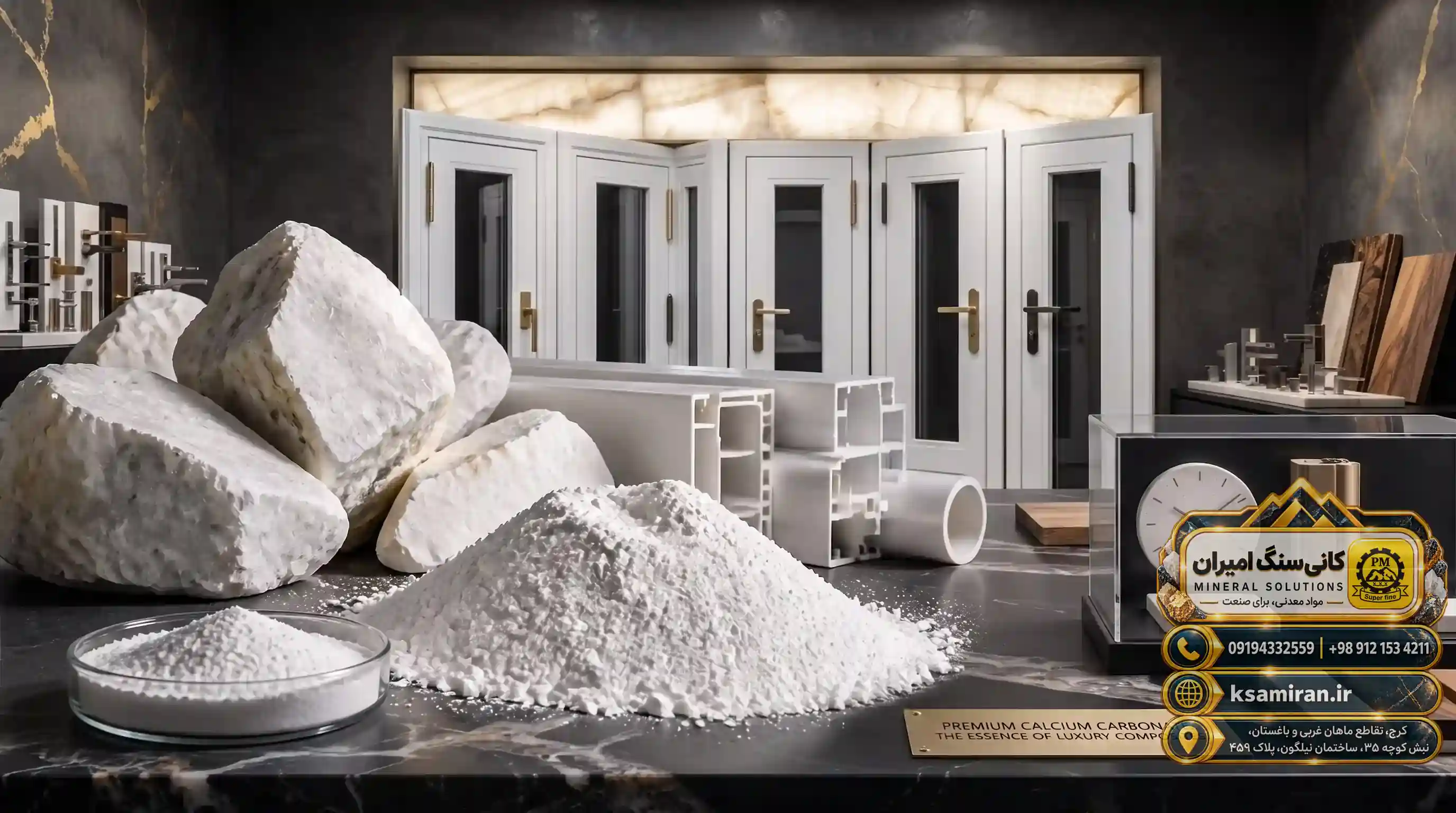
Application of Calcium Carbonate in Paint, Resin, and Surface Coatings Industries
The architectural and industrial paint and coating industry requires raw materials with a high degree of purity, desirable whiteness, and homogeneous mesh distribution. This mineral is used as a functional extender and pigment in the formulation of various water-based and oil-based paints. Proper granulation selection in this industry directly affects the covering power, gloss, and final stability of the paint, helping to control the glossiness or matte finish of the paint film.
Alongside this material, other minerals are also used in the paint manufacturing industry, and knowing them elevates product quality. For more information in this field, you can read the specialized article
The Importance of Granulation and Mesh Range (100 to 3500) in the Production Process
One of the most important factors when purchasing and applying mineral materials is paying attention to their mesh range. This product is produced and supplied in a wide range of 100 to 3500 mesh, with each segment of this spectrum having its own specific industrial application. Coarser meshes (lower numbers) are usually used in construction industries, engineered stone manufacturing, and applications requiring bulk filling, while ultra-fine meshes (higher numbers like micronized and nano) are used for thin polymer films, paper, and high-quality paints.
Choosing an inappropriate mesh can pose serious challenges to factory production lines. For example, if coarse particles are used in the production of thin profiles or sensitive pipes, the surface of the product becomes uneven and mechanical strength drops. Conversely, using an ultra-fine mesh in products that do not require it only increases the final cost and lacks economic justification.
Therefore, technical plant managers must conduct precise laboratory tests on samples before placing an order to ensure that the particle size distribution (PSD) completely matches their factory's curing equipment, extruders, or mixers, bringing production efficiency to the highest possible level.

آدرس: کرج تقاطع ماهان غربی و باغستان نبش کوچه ی 35 ساختمان نیلگون پلاک459
تلفن ۱: 0912 153 4211
ایمیل: amiran.kani.sang@gmail.com
The Role of Calcium Carbonate in the Papermaking Industry and Engineered Products
The papermaking industry is one of the traditional yet advanced consumers of mineral materials. Adding this material to paper pulp as a whitening filler, besides reducing the consumption of expensive cellulosic fibers, improves printability, increases whiteness, and enhances paper opacity. Proper particle distribution prevents pinholes or weak points in the paper sheet structure at high speeds of the papermaking machine.
In the field of engineered products and artificial engineered stones, this material also acts as the main skeleton and structural filler. In the manufacturing of engineered stones, the presence of particles with precise meshing and optimal density alongside polyester or epoxy resins creates a product with high compressive strength, negligible water absorption, and an appearance completely similar to natural stones, which has many fans in the construction industry.
Kani Sang Amiran project, focusing on the standard supply and processing of these products, covers the needs of factories active in engineered stone, paper, and polymer fields with the highest precision. Coordination between the provided technical specifications and production line expectations will guarantee sustainable quality in the final product.
Examining Whiteness, Chemical Purity, and Their Impact on Final Product Quality
In addition to particle size and mesh range, two other essential parameters—brightness degree and chemical purity (percentage of calcium carbonate and absence of metallic or silicate impurities)—play a determining role in the final selection. In industries such as paint manufacturing, paper, and white masterbatches, a high degree of whiteness is an undeniable necessity so that the final color does not look dull or yellowish.
The presence of mineral impurities such as iron or magnesium oxides can disrupt sensitive chemical processes or cause dark spots and a drop in mechanical properties at high temperatures in polymeric products. For this reason, reviewing the technical data sheet (TDS) and chemical analysis of the product prior to bulk purchasing is an essential step for incoming factory quality control.
Factories with strict quality control standards always examine submitted samples in terms of thermal loss, moisture content, and pH. This precision helps prevent unwanted reactions of raw materials with other formulation additives and guarantees product quality stability over time.

Economic Evaluation and Optimization of Raw Material Sourcing Costs
Cost management in the raw material supply chain is one of the vital duties of purchasing managers and industrial engineers. Selecting this mineral must not only meet production line requirements from a technical standpoint but also have proper economic justification. Using a high-quality mineral filler can cover a large volume of expensive base materials (such as virgin polymers or resins) and significantly reduce final production costs.
However, simply being cheap should not be the main criterion for raw material selection. Buying low-quality materials or materials with irregular granulation can lead to high waste, frequent production line shutdowns, mold damage, and ultimately heavy financial losses. Therefore, establishing a balance between purchase price, supplier quality stability, and technical efficiency of the material is the best approach for optimizing factory profitability.
Maintaining continuous communication with reputable mineral suppliers and receiving expert consultation before purchasing high tonnage minimizes commercial risks. The Kani Sang Amiran project, by providing accurate information and products tailored to the needs of various industries, helps factories make the best choice with peace of mind and secure their supply chain.
Final Checklist for Selecting and Purchasing Calcium Carbonate for the Factory
To finalize the selection and purchase process of this product, preparing a structured and standard checklist will be very helpful. This checklist should include a thorough review of technical, laboratory, and commercial parameters so that none of the important details are missed. Below are the final steps to ensure the correctness of the selection:
- Precise determination of the final application (PVC profile, paint, paper, artificial leather, etc.) and its compatibility with the product type.
- Specifying the required mesh range (between 100 to 3500 mesh) based on the type of extrusion, curing, or mixing equipment.
- Reviewing the chemical analysis sheet (TDS) in terms of purity level, brightness degree, and absence of harmful impurities.
- Conducting laboratory tests on the initial sample and evaluating its behavior at the factory pilot scale.
- Checking supply stability and the supplier's ability to deliver bulk orders on time.
By following these principles and relying on precise technical information, your factory can achieve the highest efficiency from this valuable mineral and consolidate its position in the competitive market of engineered and industrial products as a high-quality manufacturer.
| Question | Answer |
|---|---|
| What are the applications of calcium carbonate in industry? | It is used in the production of PVC/UPVC profiles and pipes, masterbatch, cables, artificial leather, paint, paper, adhesives, and engineered stone. |
| What is the producible mesh range of this product? | This product is produced and supplied in the mesh range of 100 to 3500 mesh. |
| How do we choose the right mesh for our factory? | Choosing the mesh depends on the type of application; coarse meshes are used for bulk work and fine meshes (up to 3500) are used for thin films and paints. |
| Is this material also used in the paint manufacturing industry? | Yes, it is used as an extender and functional pigment to improve paint coverage and whiteness. |
| What parameters affect the quality of this material? | Brightness degree, chemical purity, and particle size distribution (PSD) are the main quality parameters. |
| Does this product have applications in the papermaking industry? | Yes, it is used to increase whiteness, opacity, and improve the printability of paper. |
| What is the role of this material in PVC profiles? | It improves mechanical resistance, dimensional stability, and reduces the final price of the product. |
| Why is reviewing the analysis sheet (TDS) important? | It is necessary to ensure the purity level, moisture, and its coordination with the factory production line equipment. |
| Can this material be used in the production of engineered stone? | Yes, it is used as the main structural filler alongside resin to produce engineered stones. |
| How can a purchase order be placed? | By visiting the product page on the Kani Sang Amiran website and contacting the sales department. |
Specialized reference for mineral supply and processing, Kani Sang Amiran.
- ۰ ۰
- ۰ نظر